Bozzle.com and Bozzle.co.uk

Home > Paperhanging basics > Paperhanging skills > Around ceiling roses


Papering round a ceiling rose.
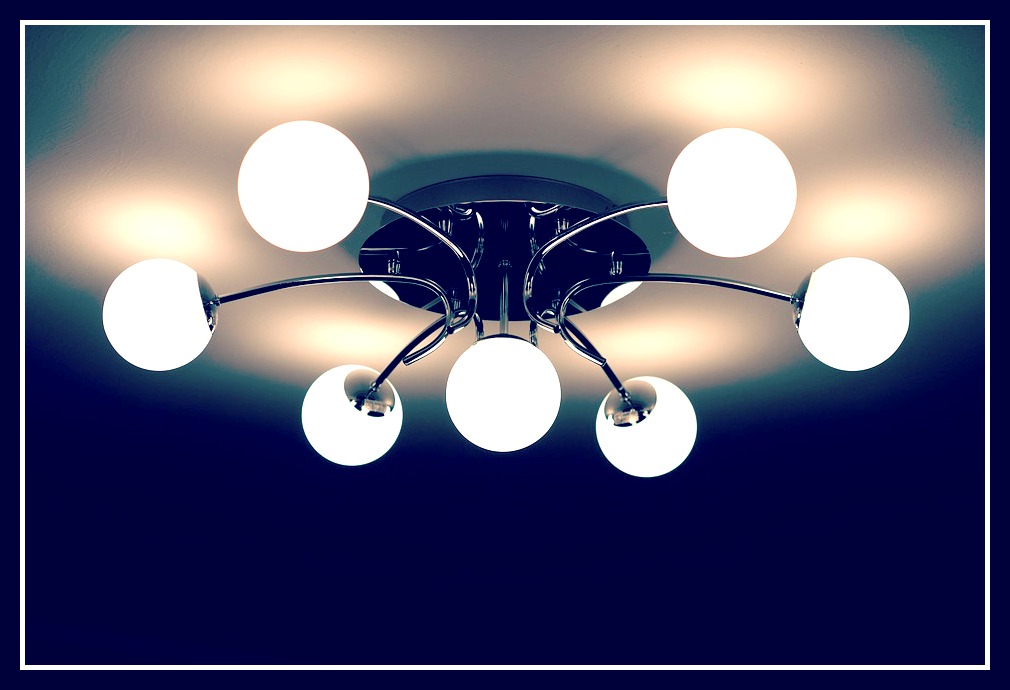
  • If the ceiling rose is quite large and you find papering round a ceiling rose daunting, then fix your first length of paper so that the edge will overlap only half of the rose. Measure an equal distance at two points from one edge of the ceiling and snap a guide-line along it.

  • For the normal sized rose, take your ceiling up to the rose and poke  a hole through the paper at that point.
  • Take your paper back 6 to 8 inches and carefully work the pendant through the hole.
  • Take your paper back to the rose and make a circle of short cuts round it.
  • Now you will be able to smooth the paper around the rose and carry on across the ceiling.

Small Obstructions .—Although electric light switches, bell pushes, etc., are now, as a rule, set flush with the wall with removable plates, and can thus be ignored for paperhanging purposes, the old projecting type, which cannot easily be unscrewed, is still to be found and must be dealt with by the paperhanger.

Hang the paper in the usual way down to any such obstruction, making a pencil dot on the paper exactly over the centre of this; then, from the nearest edge, make a horizontal cut through and a little beyond this dot.

Smooth down the remainder of the length, with the exception of those portions immediately around the obstruction. Make another cut, at right angles to the first, through the pencil mark, and then two diagonal cuts, thus forming a kind of star.

The same procedure is then adopted as when surplus paper is trimmed at the top and bottom of a length. The superfluous parts are outlined with a pencil or with the point of the scissors, drawn back, and cut along the line, the remainder being pressed snugly into place around the ob­struction.

Use of the Roller .-Instead of the smoothing brush referred to above, a broad roller may be used for pressing the paper into position on the wall. This roller is covered with felt to prevent damage to the paper, and care should be taken that no paste comes into contact with it.

The small seam roller is used on the joints, but should not be employed until three or four lengths have been hung, in order that the paste may have time to set and to minimise the risk of it squeezing out under pressure.

If the seam roller is pressed too hard against the joint, it is apt to leave a shiny streak. Some papers are so soft that even a light rolling will affect them in this way; if it is considered necessary to roll the joints, a piece of clean paper should be placed between the wallpaper and the roller.

x