Bozzle.com and Bozzle.co.uk

Home > Professional painting >> Period Styles  >> Bauhaus


Bauhaus and International Style

Bauhaus is a German expression meaning "house for building." In 1919, the economy in Germany was collapsing after a crushing war. Architect Walter Gropius was appointed to head a new institution which would help rebuild the country and form a new social order. Called the Bauhaus, the Institution called for a new "rational" social housing for the workers. Bauhaus architects rejected "bourgeois" details such as cornices, eaves and decorative details. They wanted to use principles of Classical architecture in their most pure form: without ornamentation of any kind.


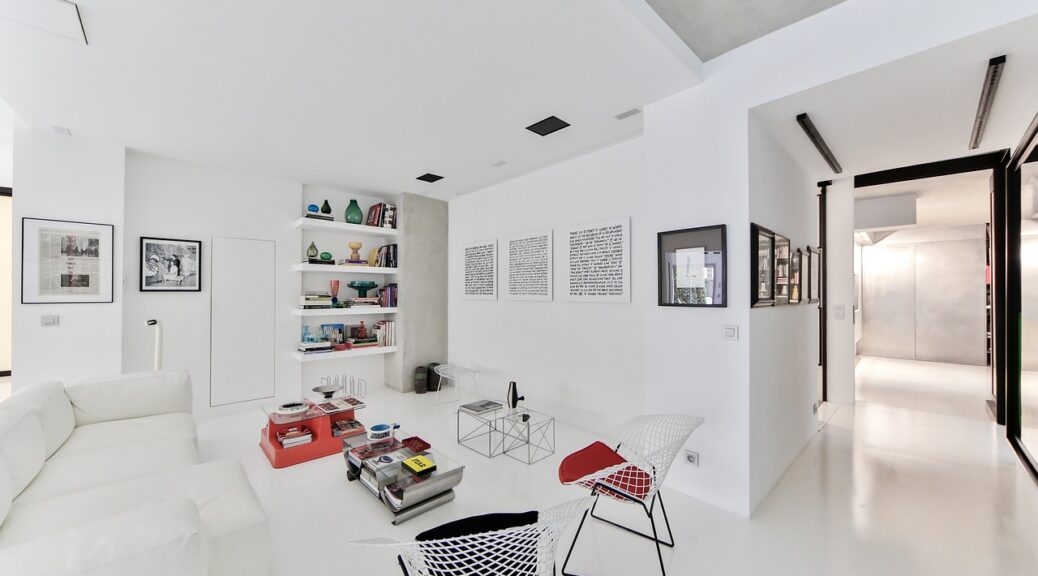
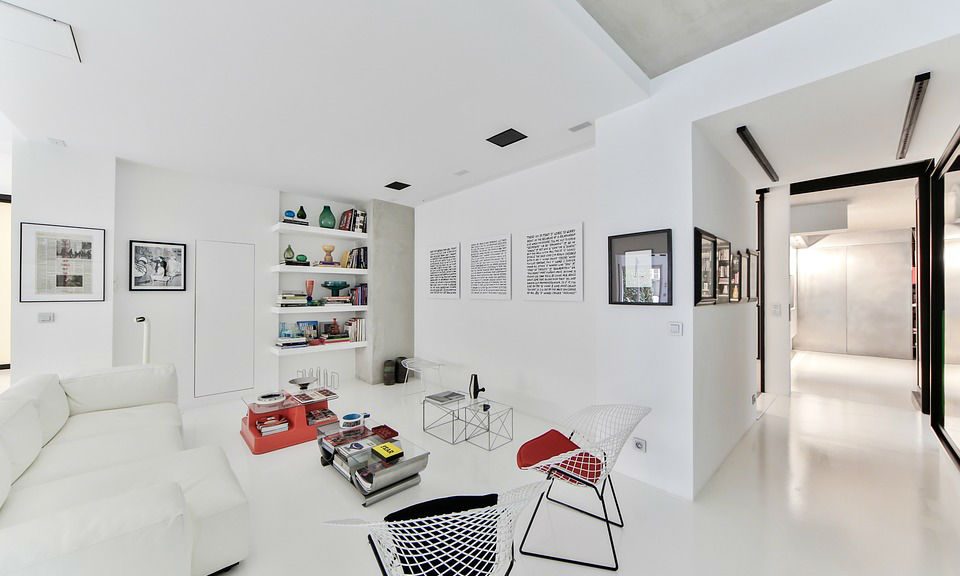
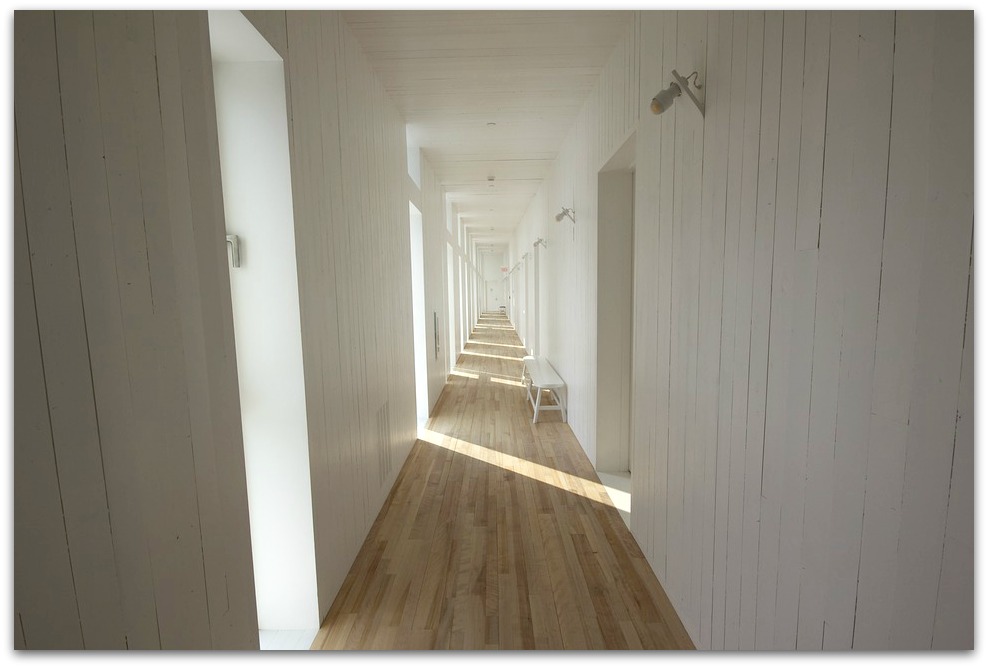
Bauhaus buildings have flat roofs, smooth facades and cubic shapes. Colors are white, gray, beige or black. Floor plans are open and furniture is functional.
The Bauhaus school disbanded when the Nazis rose to power. Walter Gropius, Mies van der Rohe and other Bauhaus leaders migrated to the United States. The term International Style was applied to the American form of Bauhaus architecture. The name came from the book The International Style by historian and critic Henry-Russell Hitchcock and architect Philip Johnson. The book was published in 1932 in conjunction with an exhibition at the Museum of Modern Art in New York. The term is again used in a later book International Architecture by Walter Gropius.
While Bauhaus architecture had been concerned with the social aspects of design, America's International Style became a symbolism of Capitalism: It is the favored architecture for office buildings, and is also found in upscale homes built for the rich. One of the most famous examples of the style is the glass and bronze Seagram Building in New York, designed by Mies van der Rohe with Philip Johnson.

The impact of the horrible experiences in the First World War, poverty and inflation created a new consciousness, which influenced strongly Design, Architecture and Art. This was the age of the Bauhaus, a movement which was a reaction to social change and which aspired to an aesthetic relevance. The "New Man" became the ideal, a concept that also expressed itself in living. The Bauhaus Design showed a purism with emphasis on straight edges and smooth, slim forms. The rooms were sparsely furnished, but filled with hygienic freshness. Superfluous features were taboo. Shining steel was discovered as a material for furniture
Bauhaus is the famous German school of design that had inestimable influence on modern architecture, the industrial and graphic arts, and theater design. It was founded in 1919 by the architect Walter Gropius in Weimar as a merger of an art academy and an arts and crafts school. The Bauhaus was based on the principles of the 19th-century English designer William Morris and the Arts and Crafts movement that art should meet the needs of society and that no distinction should be made between fine arts and practical crafts. It also depended on the more forward-looking principles that modern art and architecture must be responsive to the needs and influences of the modern industrial world and that good designs must pass the test of both aesthetic standards and sound engineering. Thus, classes were offered in crafts, typography, and commercial and industrial design, as well as in sculpture, painting, and architecture. The Bauhaus style, also known as the International Style, was marked by the absence of ornament and ostentatious facades and by harmony between function and the artistic and technical means employed.

Bauhaus style chair In 1925 the Bauhaus was moved into a group of starkly rectangular glass and concrete buildings in Dessau that were especially designed for it by Gropius. In Dessau the Bauhaus style became more strictly functional with greater emphasis on showing the beauty and suitability of basic, unadorned materials. Other outstanding architects and artists who were on the staff of the Bauhaus included the Swiss painter Paul Klee, the Russian painter Wassily Kandinsky, the Hungarian painter and designer László Moholy-Nagy (who founded the Chicago Institute of Design on the principles of the Bauhaus), the American painter Lyonel Feininger, and the German painter Oskar Schlemmer.
Gropius resigned as director of the Bauhaus in 1928, and Hannes Meyer (1889-1954) replaced him. Meyer held the position until 1930, when the school came under the direction of the architect Ludwig Mies van der Rohe, who moved it to Berlin in 1932. By 1933, when the school was closed by the Nazis, its principles and work were known worldwide. Many of its faculty immigrated to the U.S., where the Bauhaus teachings came to dominate art and architecture for decades and strongly contributed to the architectural style known as International Style.

x