Home >> Interior Decorating >> Stippling <<< Step by step stippling StipplingThe dictionary definition of stippling is a process of painting and engraving in which the effect is produced by dots and points, or again, any mode of execution in the graphic arts in which gradation of light and shade is produced by separate touches, whether of small points or larger dots. While these descriptions give a broad idea of the operation, they do not cover its full implications in the sense that the painter understands them. So far as the latter is concerned, stippling has two distinct purposes: the first is to produce an even surface to paint work by eliminating brush marks and correcting uneven distribution of the material; the second is to impart texture or pattern. In doing so, it may be added, it has the effect of making a gloss or semi-gloss finish appear flatter by reason of the shadows cast by the slight projections left by the action of the stippler.
Stipplers.Good bristle stipplers are by no means cheap but it
is worth while paying a good price for a high-grade tool. They are made in
three shapes: one
For certain effects, rubber stipplers are used; these are obtainable in various grades according to the degree of coarseness of texture desired. Technique of Stippling .Although stippling consists of nothing more than pounding the wet film of paint with the stippling tool, there is a right as well as a wrong way of performing this simple operation. The brush should be held squarely, i.e. so that its bristles are at right angles to the surface when they come into contact with the latter. The pressure exerted must be uniform all over the work and, after pressing the brush home, it must be drawn cleanly away, again at right angles, so that no skidding or slipping takes place. The force employed must be just sufficient to produce even and regular granulations ; too vigorous an action will cause the side bristles to splay outwards and thus mar the uniformity of the effect. On large surfaces it is best to have two men at work, the first applying the paint and the second following up close behind with the stippler. If only one man is available, the best procedure is to brush on a stretch of paint and then go back and stipple it before the second is applied. The width of the stretch will depend on the height of the wall or area of the ceiling and, to some extent, on the speed with which the material sets up.
Work should proceed methodically in this way, but care should be taken not
to stipple right up to the edge of the stretch; a margin of about 4 in. should
be left so that when the next stretch is applied, the paint will join up
to an unstippled edge and can thus be well brushed Out to make a perfect
joint. If this precaution is not observed, there will be a noticeable difference
in texture at the joins when the work has dried out. Although the process does not involve any great skill, it is remarkable how greatly the results can vary, and two men using similar brushes on the same surface will frequently produce quite different effects. There is a tendency, if the operative becomes tired, for the pressure of the brush to become less uniform, or again, the tool itself may become overloaded with paint ; these factors will be duly reflected in slight changes of the texture imparted to the surface. Care should be taken not to allow the brush to become overloaded with material, for in this condition it will produce a texture substantially different from that obtained from a clean brush. It will consequently be necessary, from time to time, to draw the bristles across the edge of the paint pot or, better still, across a wire spanning the Container. After some time it may be necessary to wash it out. If turpentine, or some similar solvent is employed for this purpose, it is essential that any excess should be allowed to evaporate from the brush before the latter is used again. Any solvent left in the bristles after cleaning is liable to cause blotches and, if a glossy finish is being stippled, to leave flat patches on the surface. Almost any type of paint or distemper can be stippled, but those which, like enamels, are formulated to possess a natural flow" will not, of course, retain any pattern which the stippler gives to the film. Attention should be paid to the setting point of a paint so as to determine how long the surface can safely be left before it is successfully stippled. Cleaning Stipplers .-As with every type of brush, thorough cleaning must be carried Out if the stippler is to remain in good condition, and any instructions which may be given in this respect by the manufacturers should be scrupulously followed. Turpentine or white spirit, should be employed for removing paint, after which the brush should be washed in warm water and a mild soap, such as Cas tile; the handle should not be immersed in the water but the lather well worked into the bristles. After rinsing, surplus moisture should be removed by shaking or dabbin~he tool gently against a dry cloth. The brush should never be stood on its back, or resting on its bristles, to dry ; it should be hung up or stood on edge. When put away, it should be stored in such a way that the bristles are kept straight, since any distortion may impair the efficiency of the brush. As a general rule, manufacturers of rubber stipplers issue instructions on the best methods of cleaning these implements. The use of turpentine, white spirit, and similar solvents should be avoided as being liable to injure the rubber, nor should this type of stippler be exposed to the rays of the sun for any length of time.
Colour Effects .-Attractive decorative effects can be obtained by
applying one or more harmonious or contrasting colours over the ground coat
by means of the stippler.
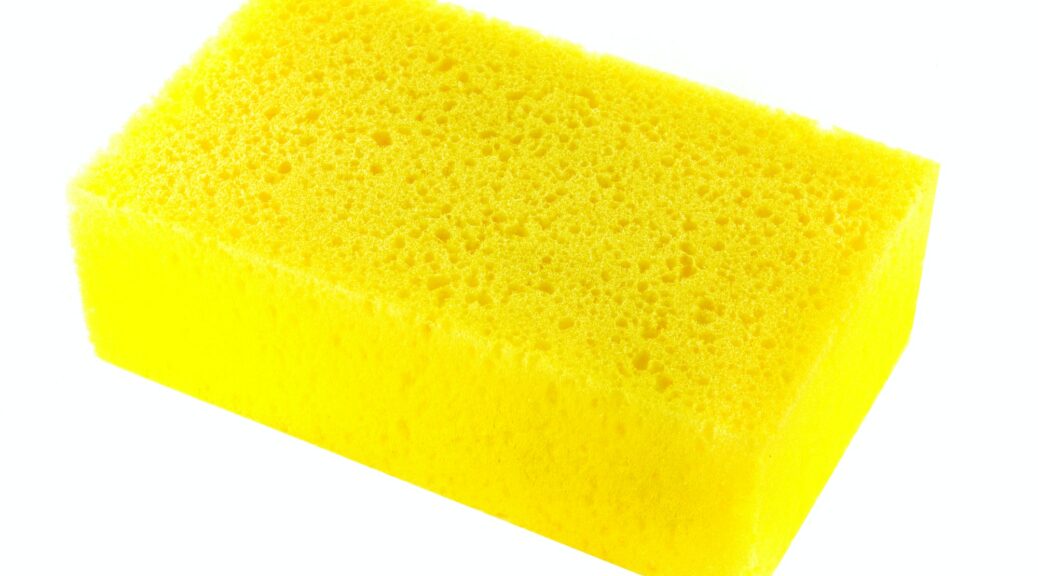
Sponge Stippling . In addition to bristle or rubber stipplers, sponges
can be employed to provide a similar kind of decoration. A coarse
honeycomb sponge cut with a flat side is probably the most satisfactory
for the purpose, though interesting results are also obtainable by the use
of a rubber sponge. This form of treatment is best suited to distemper
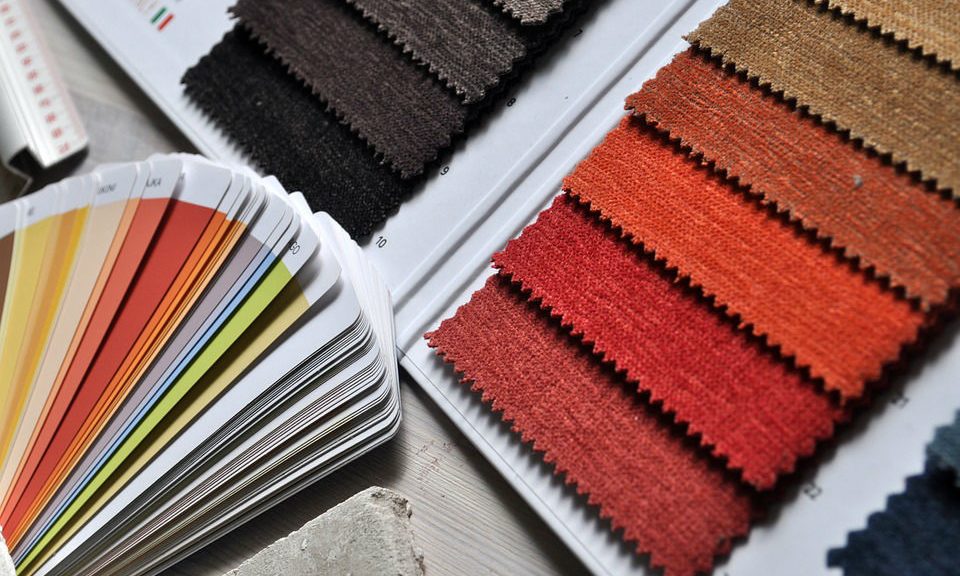
work. The reader who desires to take a full advantage of the modern demand for the various finishes, is advised to prepare sheets of the different styles and colourings. This can be conveniently done on hardboard or equivalent material. As this is very light it can be easily carried to the room for which it is intended, and the effect produced can be judged on the spot. This remark applies not only to stippled effects but to all other types of finish, e.g. graining or marbling. It is an easy matter to prepare such boards at slack times and have a large number on hand from which a prospective customer can make his choice.
|