Bozzle.com and Bozzle.co.uk

Home > Interior Decorating > Stencils


Working with Stencils

Palm tree stencil; free to copy. Bozzle.com You can stencil with regular paint brushes, but there are special circular brushes available for stenciling that have densely packed bristles.
They're better than regular brushes for filling in the tight areas of a pattern, controlling paint along curved edges, and are a bit neater. If you haven't got a proper stencil brush you can cut a brush down until the bristles are very short. Long haired floppy brushes are not very good for stencilling.
brushes come in several different sizes so you don't have to labor with a tiny brush on a larger area.
Brushes - We suggest a stencil brush for each color used.
Large (1 1/4", 1", 3/4") brush for large openings
Medium (5/8", 1/2") for medium openings (flowers or narrow vines)
Small (3/8", 1/4") for tiny openings or when one color is close to another color

Paints

Crafts stores stock small cans or bottles of paint specifically for stencilling jobs, but you could use any latex or alkyd-based paints.
If you're using more than one color on a stencil, though, it's better to work with fast-drying paints or to add a product known as "Japan Dryer" to the paint to encourage quick drying.
Stencil paints work best over an existing flat paint surface, but they'll also work over wood and non-vinyl wallpapers.
You may use waterbased paint in 2 oz. bottles. One bottle per color will be enough for a normal sized room. Two bottles will be necessary if one color is predominant. If you prefer oil based paint, stencil paintsticks or small tubs are available.

Miscellaneous - masking tape, spray adhesive (helps hold large stencils) paper or styrofoam plates, paper towels, a level for placing stencils in a mural or when you need a straight line, a permanent pen for additional regular marks.

How to Stencil

STEP 1
Position the stencil with part of the stencil in the left corner of your wall. Use masking tape to hold the stencil to the surface. Pour out a small amount of paint (size of a coin) on your plate. Dip your brush into the paint you want to use first.
STEP 2
Dab the brush on a paper towel to remove excess paint. Swirl the brush in a circular motion, working the paint into the bristles. Less paint is better = you can always apply more. If you dab the brush on the back of your hand and no paint rubs off - you are ready to proceed.
STEP 3
Apply the paint to the stencil openings in either a circular or a tapping (pouncing) motion. Move from the outside to the middle of the opening.
STEP 4
Line up additional overlaps. Lining up a previously stenciled section of the design ensuring proper alignment of the design. Continue stenciling with additional colors.
STEP 5
Remove the Overlap to see the full effect. The design should have clean, crisp edges. Too much paint will appear blotchy and bleed underneath the stencil. If this happens, make sure to wipe the stencil dry before continuing.
STEP 6
When you come to a corner, try to end with the whole of the design (i.e. improvise a little to finish your design so that half of a leaf, apple, house, etc. will be divided on each wall.
Wash the stencil periodically, preferably every thirty minutes. This prevents clogging of the openings and drying of paint on the stencil. Use cool to warm water and soap, wiping carefully towards the center of the cutout so as not to tear any bridges. Some very intricate stencils are difficult to clean, so be very careful or just wipe excess paint off.
When using a stenciling brush, the best painting technique is to lightly tap the end of the brush on the surface, covering small sections at a time. Don't get too much paint on the brush because paint could run down behind the stencil. stencilled cabinet door
If you're using more than one color, one option is to use separate brushes to apply each color. On large projects, it's often easier to apply one color first, moving the stencil as needed. Then go back to the beginning and apply the second color, and so on, until all the colors are done. That way, the first colors will dry before the next ones are applied.
By the way, wet paint can smear when you pull the stencil off, so make sure the paint has dried. Stenciling paints dry quickly and shouldn't pose this problem.

Sponge Stenciling

One variation on the stenciling technique is to cut a pattern into a sponge and use that to stamp the pattern onto a surface.
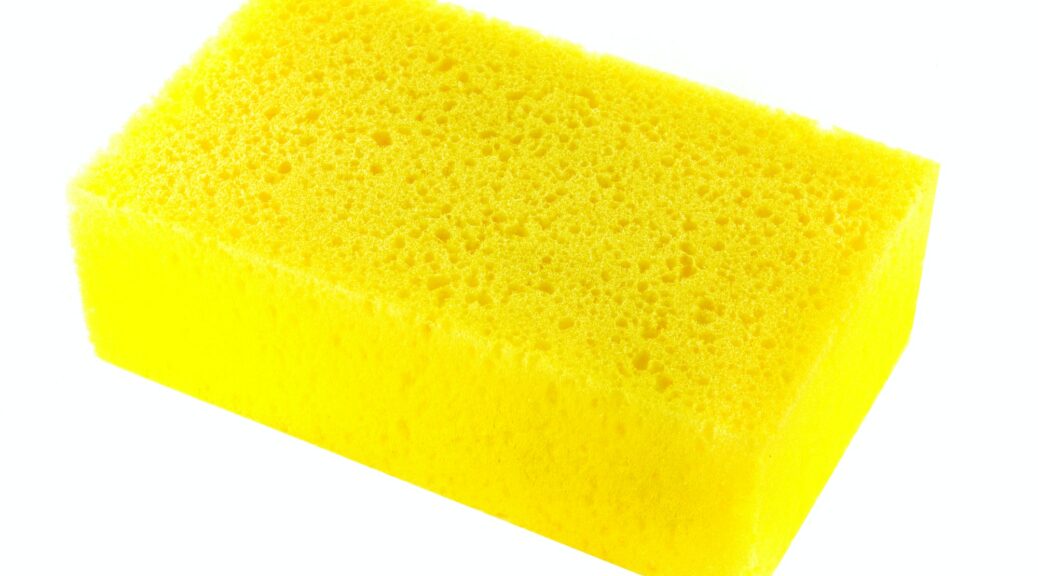
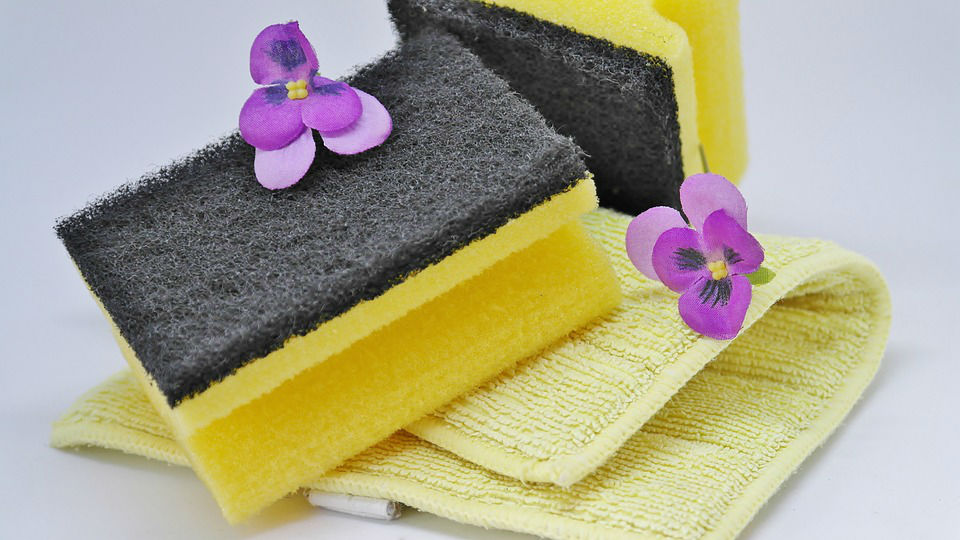
A regular, synthetic cleaning sponge works best for this application because of it's relatively flat surfaces. For the patterns, you could use anything, but your best bet is to find biscuit/cake cutters in shapes you like.
The hard part of the job is cutting a precise pattern into the sponge. With a cutter it's a lot easier. Just press the cutter into the sponge and trim along the outside edges with small sharp scissors.
Once you've cut the sponge, you're ready to paint. Before sponging the wall, practice on a scrap of cardboard or plaster wall to get just the right feel for the stencil and how much paint to use.
To make sure you get the look you want, mark off the likeliest spots for stenciling before painting then make any placement corrections.
When you're ready to paint, pour a little paint into a shallow, flat container like a pie tin or a paint lid, and use that to load up the sponge. Dunking directly into the paint bucket may overload the sponge. Press the sponge onto the wall at your marks, periodically stepping back to check your work.

Getting stencils

You can buy ready-made stencils or make your own.
Ready-made stencils are quite expensive but can save you a lot of time and trouble, usually coming with full instructions on how to use.
You can buy from an extremely wide range of designs, flowers,animals, heraldic, imitation wallpapers, are just a few. Stencils which can be copied, printed out and used.

x