Bozzle.com and Bozzle.co.uk

Home >> Interior Decorating >> Brown Bag Walls and morecopyright wuvie.net >>>


How to Brown Bag Walls and more by Karen Manasco


Inspired by Bonnye Manning, produced for this page by Karen Manasco of www.wuvie.net.
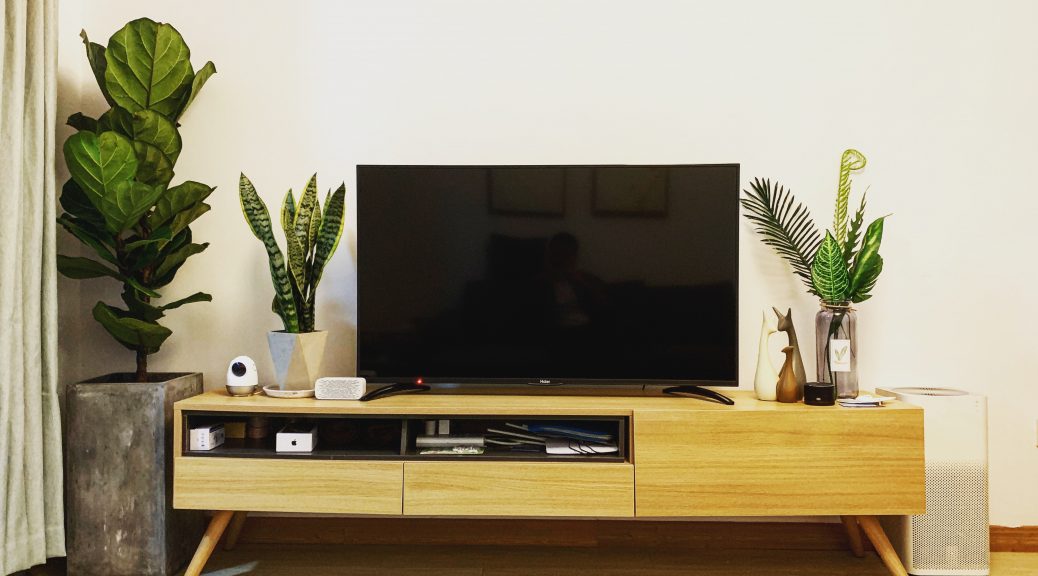

Though still in progress, this is a shot of the corner of the room before and after:

before and after
So your walls are dull. Drab. Boring and maybe even damaged. See examples here

and here, where you can see the seams of the sheetrock on the ceiling.
Look at this one, and you'll see why I chose to use the technique on the ceiling as well as the walls.
Perhaps you live in a home like ours, which was created with the materials on hand.
Okay, so it's never going to be on the cover of a magazine, but it's yours and it needs something.
Why call a decorator and pay top dollar for something you could do yourself.
Why drag questionable chemicals into your home?
An easy and attractive solution? Brown bag your walls!


A view of the corner taken with a flash, so it actually appears lighter than it is in the room. Look closely, especially to the left of
the image and you can see the dimpled walls. Our walls have what was supposed to be decorative mud patches all over them. Not a pretty
sight. If you are lucky enough to have flat walls, two thumbs up to you. I'm not going to sand off all the bumps, that would be a major
undertaking and I simply do not have the time, nor the energy, nor the lungs for such. Yes, we will be changing the colors of the items
in the room. Silver and gold? What were we thinking?

Please know in advance that you are not limited to brown. We'll cover all the options later.

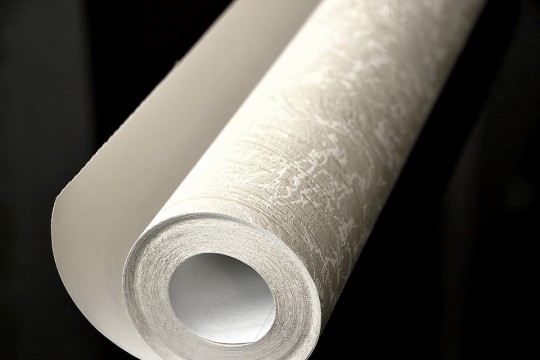
No, we're not suggesting you save lunch bags for a few years, it is easier these days. Bulk brown paper is available in large rolls. Tear
it up, paste it to the walls and stand back. Wow! No, you don't have to wad it up and then unwad it either, you use it right off the roll,
no extra work. Decide you want to move the furniture around and now you have a hole in the wall? Slap paste on a small piece, stick it to
the wall and run Draw Tite back over it. It is truly that easy, and it blends in. No one will ever know you made a repair.

The first thing I'll say is this technique is so easy and affordable,
and can be picked up or dropped at any moment. You are not chained to
finishing a wall in one day, nor are you obligated to apply it with strict rules other than sticking to the recommended materials.
Prime, smear, stick and seal. Yes, it is that easy. Kids can do it!


Let's get started. Keep in mind, this instructions are not carved in stone,
but rather are my approach to the project. Feel free to alter according to your taste.

MATERIALS NEEDED

The brands listed are essential for achieving the mottled / marbled look.
I have tried to alter the paper, the paste and the sealer, but even as Bonnye mentions, it isn't worth messing with.
The materials listed work. Substitutions do not.

Draw tite clear no run formula by Sherwin Williams
  • Draw-Tite Clear No Run Primer/Sealer. A product from Sherwin Williams. Runs a bit high, but remember, it is both a penetrating
    sealer and a primer, no need for more products. Runs about $24.50 online, but when the shipping is added, $35.11 per can. A trip to
    Broken Arrow / Tulsa, Oklahoma (closest for us) eliminates the shipping charge, but costs more per can. A bit of bean counting reveals it
    is actually cheaper to order online. A bit of a bother to find at times, available online. Consider the cost of fuel, your time and you'll
    likely order it online. Doing a large room or many projects? Consider a five gallon
    bucket, you'll save on shipping as well as the cost per gallon, and won't be running the roads to buy more.

  • Standard Contractor's Paper. Finish Factor brand, available in large rolls at most Lowe's Home Improvement Centers.
    Distributed by Trimaco, LLC. Item #126347. In our area, a 35" x 140 ft. roll runs $9.98 plus tax.

    For a pink hue instead of brown, you may also use Red Rosin paper, but it is often difficult to locate. Easy Mask brand by Loparex. In our area, a 35" x 166 ft. roll is $14.66 plus tax. Try the roofing section of your local hardware center. Don't give up, someone will eventually know what on earth you are talking about.

    Romans Golden Harvest wallpaper paste GH-34
  • Golden Harvest brand GH-34 paste for unpasted wallpaper. A Roman decorating product available in one gallon sized buckets.
    In our area, this runs $10.99 plus tax. Ace Hardware good about carrying it or ordering it for you if you have trouble locating it.
    Folks, don't try to use the paste you have on hand, or substitute a different number from the same company. Repeat after me, GH-34. GH-34.
    GH-34. Order it online through Ace and it will ship free to your local Ace Hardware store. You may consider keeping an extra gallon on hand
    or find yourself scraping the bottom of the bucket desperate for just one more drop, enough paste for only one more piece of paper!
    I felt like an addict when I ran out and found myself, literally scraping, scooping, using all of my fingers to get just one more swipe out of the bucket.
    When you run out of supplies, you are out of business. Rather disappointing, because if you enjoy brownbagging as much as I do, you just
    don't want to stop until the room is finished.

    TOOLS NEEDED

  • Old newspapers, plastic sheeting, garbage bags or shower curtains to cover work area.
  • Paintbrush to apply primer / sealer to cracks, such as in corners.
  • Small paint roller with replacement heads. There is no need for a large roller unless you are doing huge projects on giant walls.
    You will be working in small sections at a time, so a small roller works quite well. If you choose a good size, such as a four inch
    roller, you can simply dip the roller into the can of Draw Tite, then tap the roller on the edge of the can to remove the excess. No need
    for a paint tray.


    Yep, it's a mess right now, but definitely a mess in progress for the better.
    Hans sits atop the wood burning stove, anxious for this mess to be over with so he can go back to sleep peacefully.

    PREPARATION - THE ROOM

  • Have you moved the furniture yet? No? Then at least toss plastic sheets over it, you don't want any drips.
    *HINT* Cheap shower curtains from a dollar store are a great cover!
  • When your hands are completely covered in paste, the phone will ring. Have damp washcloths or towels handy or don't answer the phone.
  • Use extra caution when applying this technique to the ceiling. While a ceiling fan provides ample air circulation, you may find
    yourself wrapped up in what you are doing and back into the fan while working on the ceiling. No need for details, but I'm sure you may
    be curious why one would include such advise. ;-). A portable oscillating fan comes in handy for air flow as well.

    APPLICATION - PRIMER

    A bit of a cheat here, I often draw on the walls to keep track of where I have and have not primed. Don't use a marker, use a pencil so
    none of the ink bleeds through. This makes it so easy to begin and end sections all over the room, giving you multiple places to apply the
    paper as the primer seals. You could even write the date or time of primer application if you are doing a very large room. Consider writing
    something on the wall for the future owner of your home. They will likely remove the paper and may find it amusing that you left a note.
    If they are going to curse you, they may as well address you by name.

    Using a roller brush, apply a coat of Draw Tite sealer to the wall. Nothing fancy, just make sure you get good coverage.
    When it is dry to the touch, you may begin applying the paper, but it doesn't hurt a thing to wait until the next day to begin.

    PREPARATION - TORN PAPER

    Don't ask why, but we have a pool table in our bedroom which makes the perfect workspace for
    brownbagging. Covered with plastic sheeting, everything is in check. You can also use the floor, a table, etc.
    Lay the roll of paper on the work surface, unrolling about a foot. The underside of the paper as it comes off the roll is where the paste
    vary the shape of the remaining pieces torn from the roll will be applied. Don't apply paste to the outside, make certain it is on the inner side, the side which touches the other paper as it is
    on the roll. (Hope that makes sense!)


    First, tear the edges off in strips along the edge. Then tear the middle section into pieces of various sizes and shapes.
    Don't try to be fancy, just tear the paper up. Typically, pieces are torn into sizes about the size of a dinner plate, slightly
    smaller or larger depending on your preference. Put the straight edges in one pile, and the other pieces in another pile. Using the
    straight edged pieces, apply those first along the ceiling (unless you are doing the ceiling, too) and any edges that will need to be neat.
    After you've played with the technique for a while you will discover how you can squish and press the edges of randomly torn pieces to
    Tearing the edges of a roll for straight pieces form straight edges or edge an item such as a ceiling fan.

    Personally, I find it easier to work when you have already torn quite a bit of paper. Often I will lay out a big roll on the bed, stretch
    out about three feet, tear off the edges, then tear off the remaining three foot section. When you have three to four 'mini rolls' with the
    edges torn off, begin tearing them into dinner plate sizes or size of your choice, then gather about 20-30 pieces together, keeping them rolled
    up in groups. This will allow you to paste one wad at a time, knowing how many pieces you will have to work with.

    If you intend to use the brownbagging method on the entire room, including the ceiling, it is not necessary to use straight edges where
    the ceiling and the wall meet. Instead, just put the pieces into the seam and spread the paper over both the ceiling and the wall.
    You will find that with this method, you will likely end up with numerous pieces of edging that are not necessary. Fear not. Simply run
    the excess pieces through a shredder. You now have animal bedding, gift bag stuffing, padding to ship something in the mail and more.

    THE MOTTLED EFFECT - TECHNIQUE TIDBITS

    Stay with me on the following explanation. In order to achieve the mottled look, it is my experience that you will need to apply the paper
    gently, then seal in the same time frame. However, this may sound funny, but you do not want to press the paper into place, nor do you want
    to roll the sealer on too firmly, or you will in essence press the paper to the wall too tightly and you will lose the effect.

    As you apply a pasted piece to the wall, ensure it is on the wall without big bumps or creases, and ensure the edges are touching the walls
    but don't squish it to the wall. If someone were to watch how I apply it, they might think the paper will never stick, but trust me, if
    you use enough paste (you'll get the hang quickly) the paper will glop to the wall without much effort. This is what you are after, just
    keeping the paper on the wall until you roll the sealer over it.

    APPLICATION - PASTED PAPER

    Using an old cookie sheet, or something large enough to contain a bit of paste mess, lay one piece at a time in the tray and grab a small
    glob of paste out of the bucket with your bare hands. Yep, your bare hands. Smear it all over the piece, not too light but not too thick
    then fold the piece in half (gooey side to gooey side) and set it aside. This is known as booking in the wallpaper world.

    Continue making little 'books' with the paste until you have a nice stack of them, oh, about 20 of them or so. I'm not in a race to work
    fast, but don't work too slowly, or the papers will absorb so much paste that they become difficult to separate. Try to work somewhat quickly
    or else the pieces tend to become a massive stack of muck, tearing as you try to open the folded pieces. This is why I tend to stay with
    about 20 pieces. When you are finished making a pile, turn it over so that the first paper book on top is the one you pasted first, it is
    ready to go on the wall.

    APPLICATION - SEALER

    After you press all of the 20 or so pieces to the wall, ensure there are no terribly large bubbles, folds or otherwise, and roll the sealer
    over it. Be sure to scrape off any drying globs of paste or it will look like a white speck on the wall if you seal over it. Don't worry if you overlap more sealer onto the wall, because remember, it is also a primer. Because you want to allow the primer
    / sealer to dry before applying the paper, it is better to work about the room instead of in one section at a time. This gives the other
    areas time to dry so you can go back to that section after you complete another.

    Okay, so a few days have passed, you've been working in other sections, and you turn around to see...gasp! A bald spot? The bald spot is
    a section of the wall or ceiling where the paper may have absorbed the sealer, leaving a flat spot that does not shine when the light hits
    it the way the rest of the wall does. Alas, this is no problem and no one will know how you fixed it. Often, after I have finished applying
    sealer to my 20 count pieces of brown paper, there is still a bit of sealer left on the roller. I simply turn on all the lights in the room,
    then walk around looking for these bald spots. Find one? Swipe the roller on it. When it dries, no one will be the wiser.

  • See a bump that really sticks out? Smash it with the hammer, roll sealer over it.
  • Found a white spot from dried wallpaper paste? Scrape it off, trying not to tear the paper, apply more sealer in the spot.
  • Oops! Found a big white hole where you missed applying paper? Tear off a piece of paper, paste it, let it sit for a few moments to absorb
    the paste, stick it the wall and seal over it.

    You see how easy this technique is?

    Now you can stand back and admire what you have accomplished. You could even add a glittery tint to the sealer. That is right, folks.
    You don't have to buy extra glaze that costs an arm and a leg. Simply pour basic paint into a portion of sealer. You could tint an entire
    gallon and then mix it well if you plan to glaze a large section or even a ceiling. Bonnye suggested adding a dash of gold paint to the
    sealer, which made me realize that adding fine polyester flake glitter would be spectacular! Find Poly*Flake superfine glitter at your local
    hobby supply store.

    CLEANUP

    To save time, if you are working off and on throughout the day and would like to accomplish much in one period, keep a plastic grocery bag
    or plastic wrap handy. Instead of washing and waiting for your tools to dry between each use and break, simply wrap the rollers and brushes
    in plastic wrap. When you are ready to apply more sealer or primer, the tools are ready to use. Replace the baggie every now and then.
    Warm water. Yep, that's it. Warm water.

    FREQUENTLY ASKED QUESTIONS

  • Does the paste or sealer / primer hurt your hands or clothing?
    In my experience, care and concern for the skin is always the way to go, but I must say, I have this stuff all over my hands while applying
    and have never had a problem. It rinses off with warm water, yes it is that easy. After you are finished for the day, wash your hands and
    apply lotion, it can't hurt. With regard to clothing, it is always advised to wear something comfy, but something on which you would not
    mind a stain or two. A clear one, at that, but still a stain.


    Google
     
    Web www.bozzle.com

    The colors should not be applied too heavily, and the brushes should be frequently rinsed in turpentine (or water, in the case of water-based colors) or they will become clogged.

    Graduated or ombré effects on ceilings are carried out in precisely the same manner as that for walls: the surface is grounded and allowed to dry hard and the lightest shade is then applied to the centre of the ceiling and brushed freely outwards with a circular movement; the same process is carried out with successively deeper shades, each being allowed to overlap its predecessor slightly and being blended and stippled.

    To produce a satisfactory result the gradation must be uniform and quite free from lines or marks. On any large expanse of surface this is by no means easy by brush, although it is simple enough if spray equipment is available; for information on shadow painting by spray see the following instructions;
    Shading .This method of treatment is essentially one adapted to the use of the spray gun; shading with the brush requires skilled handling and even in the hands of the expert can hardly produce results comparable with those obtained by the use of the spray. It must not be taken for granted that no skill is required in spraying, as this is not correct ; the greatest difficulty that presents itself is in the elimination of a streaky appearance, due to the variation of density in the band of color produced by the gun. There is no difficulty in shading small surfaces,but the trouble is experienced when large wall flanks have to be treated in this manner. There is only one method of overcoming this difficulty and that lies in practice, which enables the operator to gauge the pressure on his trigger and the correct method of application.

    Shading enables the decorator to introduce a number of shades into his colour scheme, ranging from variations in tone of one color to the blending of various colors, one into the other. The ground color is applied over the whole surface and must be the most predominating in the case of multi-color schemes, or the most predominating shade where variations of one color are being employed. This ground coat may be applied either by spray or brush, but as the shading is carried out by spray, the presence of the spray outfit will probably ensure its use for the purpose.

    The shading effect is produced by the way in which the coats are applied. Thus, when a deep tone is to be graduated into a lighter one, the heavier tone is applied by opening the nozzle and holding the gun at a distance of about 6 in. ; as the tone is required to be lightened, so the nozzle is closed and the distance of the gun from the surface increased. This change in application must be gradual, otherwise the streakiness already mentioned is bound to show itself, and once this appears it is very difficult to remedy. However, proper use of the gun will prevent the possibility of this trouble occurring.

    There is no doubt that shading of wall surfaces has a definite place in decorative schemes, and wallboards in particular lend themselves to this form of decoration. They have the advantage over plaster surfaces in the fact that their texture is always the same; this cannot be said for plaster work, in which the decorator has often to contend with variations in the rendering of the plaster due to the work of the plasterer.

    Particular attention must be paid, however, to the porous type of board, and the application of the paint carried out with care, otherwise the work is liable to turn out patchy. Such results are due to unevenness of application and are in no way due to the wallboard surface; they must not be confused with the results, sometimes obtained on plaster walls, which are due to the variations of porosity in the plaster.

    Examples

    bad ceiling surface

    ceiling uneven

    .


  • x